World route and Switch Palaces
Follow the main route through Dinosaur Land and use switches to make exploration safer.
Story and late-game spoilers.
Original SNES game and its emulated releases. Controls use SNES button labels. Super Mario Advance 2 differences are outside this guide.
| Switch | Region / route |
|---|---|
| Yellow | Yoshi’s Island |
| Green | Donut Plains alternate route |
| Red | Vanilla Dome alternate route |
| Blue | Forest of Illusion 2 secret exit |
Begin on Yoshi’s Island

The Yellow Switch Palace is reached from the early island route and activates yellow blocks elsewhere. These blocks often make later jumps safer or provide a useful platform. Visit the palace early if you want a forgiving first playthrough, then continue toward Iggy’s Castle.
Donut Plains opens the map
Donut Plains introduces the cape and several alternate exits. Explore red-dot stages and Ghost Houses when the map presents a branch. The Green Switch Palace is hidden behind an alternate route in Donut Plains; reaching the normal goal in a stage may not reveal it.
Vanilla Dome and the bridge
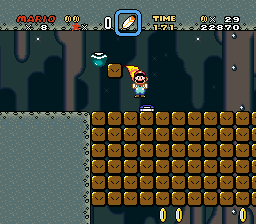
Vanilla Dome’s routes can lead toward different bridges and optional content. Keep track of which exit you used, especially when a stage connects back to an existing path. The Red Switch Palace is reached through this broader section of the map, not by simply clearing every normal goal once.
Escape the Forest of Illusion
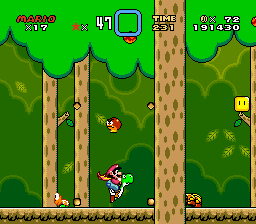
The forest deliberately loops normal routes. Search for secret exits when ordinary clears stop opening a useful way forward. The Blue Switch Palace is associated with a secret exit in Forest of Illusion 2. Check underwater passages and alternate routes rather than repeatedly finishing the same goal.
Chocolate Island and the Valley
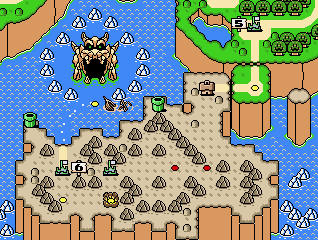
Later levels test flight, timing and route selection. Take a cape or other preferred power-up into difficult stages, but practise a safe fallback when you lose it. The Valley of Bowser leads to the finale, while Star World can create shortcuts that bypass parts of the standard route.
The maps
The overworld’s terrain layer, drawn from the game’s own tiles and palettes.
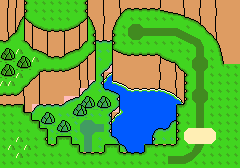
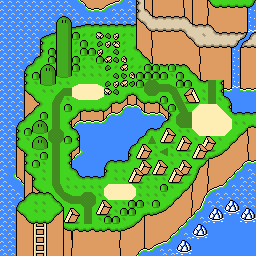
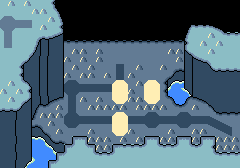
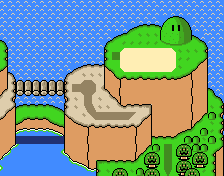
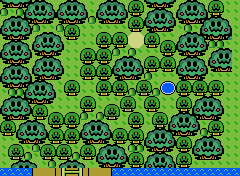
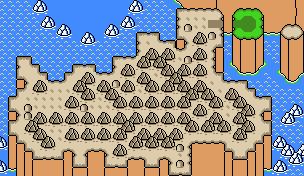
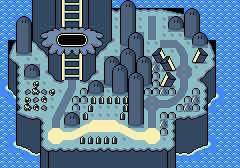
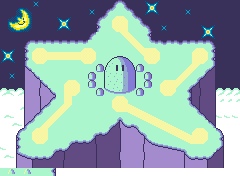
Pictures drawn from the Super Mario World (SNES) game data: sprites are assembled from their tiles the way the game draws them, in the palette of a level they appear in; blocks, coins and berries are built from their 16×16 level-tile definitions with the animated tiles in place; maps show the overworld’s terrain layer (the level tiles and paths on its other layer are not in the asset export). Animation timing is approximate.