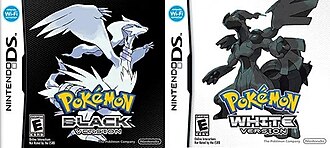
Story team & badge preparation
Plan an original Black / White party around obtainable teammates, the eight Gyms and the first League finale.
Story and late-game spoilers.
Original Black and White; their sequels have different routes and encounter availability.
Use the original starting route
Black and White begin in Nuvema Town with Bianca and Cheren. Their route and encounter pool differ from Black 2 and White 2, whose journey begins in Aspertia. The original regional Pokédex contains 156 entries, including Victini at #000. The opening journey introduces Unova species; familiar Pokémon from earlier regions become relevant later through post-story encounters and transfers.
Build a party around jobs rather than collecting six similar attackers. A starter can remain a useful central teammate, but another party member should handle its difficult matchups. Add a physical attacker, special coverage and a dependable answer to the next Gym as those options become obtainable. The illustrated original Unova Pokédex shows the Generation V types; Fairy does not exist in these games.


Prepare for the first Gym’s starter-dependent opponent
| Your starter | Gym specialist | Dreamyard gift |
|---|---|---|
| Snivy | Chili — Fire | Panpour — Water |
| Tepig | Cress — Water | Pansage — Grass |
| Oshawott | Cilan — Grass | Pansear — Fire |
Talk to the gift-giver in the Dreamyard before challenging Striaton. The gift supplies a type advantage against the specialist’s elemental monkey. Train it until it has a usable attack and enough health; a favourable type label on an unprepared Pokémon is not sufficient. The Gym also uses Lillipup, so bring a plan for an ordinary Normal-type opponent.
Keep potion use and switching in mind during the first few battles. Do not spend the whole early experience budget on one member if another is expected to solve a specific matchup. After the first badge, keep catching useful roles rather than permanently committing to every temporary support Pokémon.
Read the next Gym’s team, not just its specialist type
| City / Leader | Specialist type | Highest level |
|---|---|---|
| Striaton — Cilan, Chili or Cress | Grass, Fire or Water | 14 |
| Nacrene — Lenora | Normal | 20 |
| Castelia — Burgh | Bug | 23 |
| Nimbasa — Elesa | Electric | 27 |
| Driftveil — Clay | Ground | 31 |
| Mistralton — Skyla | Flying | 35 |
| Icirrus — Brycen | Ice | 39 |
| Opelucid — Drayden in Black; Iris in White | Dragon | 43 |
These are reference levels, not mandatory party levels or a guarantee of victory. Secondary types, abilities, speed and available attacks change the matchup. Lenora’s Watchog punishes a careless handoff after Herdier falls with Retaliate; keep the next active member healthy. Burgh’s Dwebble combines Bug and Rock, while Leavanny combines Bug and Grass. Check each opponent rather than assuming one Fire attack is a complete plan.
Collect useful roles as the route opens
- Lillipup appears early and provides a straightforward physical attacker; it can support a starter without duplicating its elemental typing.
- Fighting options around the outside of Pinwheel Forest help when preparing for Normal opponents. Check your version’s encounter list for Sawk and Throh.
- Sandile on Route 4 and in the desert adds Ground / Dark typing; it is useful against grounded Electric and several later Psychic or Ghost matchups.
- Drilbur comes from cave dust-cloud encounters, a different method from ordinary grass. Keep that method in your collection notes.
- Joltik in Chargestone Cave offers Bug / Electric coverage later in the story. Its availability cannot solve the opening Striaton challenge.
These are examples of obtainable roles, not a single required team. Use what fits the starter, current moves and personal preference. If a new recruit solves the next battle but needs training, use ordinary trainers and safe wild encounters before replacing a reliable party member. Keep at least one alternative plan for an opponent whose secondary type blocks the obvious attack.


Avoid the common Electric and Ground assumptions
Elesa uses airborne Emolga as well as Zebstrika. Ground attacks cannot hit Emolga because of its Flying typing, even though Electric suggests a Ground answer. Use a separate response such as a suitable Rock attack for that part of the fight and keep the chosen attacker healthy. Volt Switch can change the target unexpectedly, so plan the next turn around the actual Pokémon on the field.
Against Clay, Water or Grass coverage can help, but Excadrill’s Ground / Steel typing and physical pressure require a stronger plan than an untrained super-effective move. Choose an attacker that can survive the expected hit or act first. Later, prepare for Skyla’s secondary types and the final Dragon Gym using the moves available in Generation V rather than a later Fairy-type solution.

Use reusable TMs without wasting the move slot
Generation V TMs can be used repeatedly. Teach compatible teammates coverage when it fits their attacking stat and role. A physical move on a special attacker or an inaccurate move used as the only answer can still create trouble. Check base power, accuracy, PP and secondary effects before replacing a dependable attack. Reusable does not mean that every move is equally useful.
Keep HM utility available for exploration, and separate it from the six battle roles where practical. Bring healing and PP recovery for long sequences. A held item’s exact effect matters: equip a boost or defensive tool that the active member can use, rather than leaving the best item unused in the Bag. The items and training reference introduces the relevant tools.
Prepare for the first League and the story finale
The initial Elite Four can be challenged in any order: Shauntal specialises in Ghost, Grimsley in Dark, Caitlin in Psychic and Marshal in Fighting. Their first teams use level 48 Pokémon with a level 50 ace. Dark coverage helps against Ghost and Psychic but must not be treated as a universal answer to Fighting. Plan a response to each specialist and inspect secondary types and coverage.
The first visit leads into N and Ghetsis rather than a normal Champion battle against Alder. Reshiram is the player’s story dragon in Black; Zekrom is the player’s in White. Save before the sequence and stock recovery items. A team ready for the four specialists still needs to face the broader story-finale teams. Alder belongs to the later League rematch, which is a separate preparation target.

Make the post-story objective specific
After the finale, the eastern region, new encounters and stronger challenges broaden the journey. Choose a concrete objective: a missing evolution, a legendary encounter, an accessible TM or preparation for a League rematch. Returning with a written method and location is more useful than wandering because the Pokédex total feels low.
Use version differences and legendary encounters to plan collection trips. Local trading can fill external requirements when another compatible game and system are available. Historical event rewards should be recorded separately from ordinary in-game catches, especially when a fresh save does not have the required event item.
Use the next concrete objective in this guide, prepare for its requirements, then check the result in your own game.