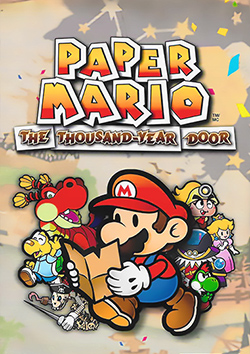
Fun trivia
Three memorable details to notice while playing Paper Mario: The Thousand-Year Door.
Story and late-game spoilers.
Original GameCube release; the Switch remake has changes not covered here.
The audience matters
Battles take place on a stage with an audience. Performance and the surrounding spectacle become part of the combat identity.
Paper is more than a look
Mario’s paper transformations help him navigate spaces. The visual style is also a source of exploration mechanics.
Three kinds of stars
Crystal Stars, Star Pieces and Shine Sprites have different jobs. Their similar names conceal very different progression and upgrade systems.
Paper abilities have physical consequences

Mario’s paper transformations use the visual premise to change access through narrow spaces and other environmental puzzles. Partners extend that idea with abilities tailored to different objects and terrain. The style is therefore part of the route design, not merely how the characters are drawn. A suspicious gap can be a clue about a future transformation, which makes visual observation useful before the necessary ability is unlocked.
The stage makes performance a resource
The audience and stage effects give battles their own spectacle, while successful action commands make the player an active participant in the performance. Choosing an attack is only part of using it well. This gives turn-based combat a rhythm closer to a rehearsed routine, and makes a partner’s individual input worth learning. The original GameCube edition should stay distinct from the remake when comparing animations, presentation or revised conveniences.