Ruby and Sapphire Generation III battle mechanics
Understand damage categories, natures, abilities, weather, Double Battles and original Steel resistances.
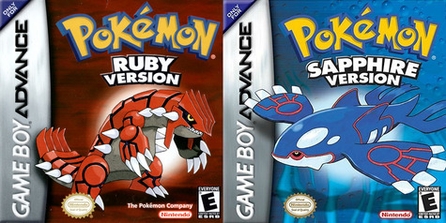
Original Pokémon Ruby Version and Pokémon Sapphire Version for Game Boy Advance. Version-specific encounters and story roles are labelled. Emerald and the Nintendo 3DS remakes have separate rules and progression.

Type decides the damage category
| Physical types | Special types |
|---|---|
| Normal, Fighting, Flying, Poison, Ground, Rock, Bug, Ghost, Steel | Fire, Water, Grass, Electric, Psychic, Ice, Dragon, Dark |
Status moves remain status regardless of type. Hidden Power uses its IV-determined type to decide its category, and its power is also IV-dependent. Fixed-damage attacks have their own rules. This is why a Pokémon’s Attack or Special Attack must be compared with the actual type it is using.
Abilities and natures change a matchup
Ruby/Sapphire introduce abilities and natures. An ability can change damage, immunities or turn behaviour: Levitate avoids ordinary Ground attacks, while Intimidate lowers opposing Attack. A nature usually raises one non-HP stat by 10% and lowers another by 10%, with five neutral natures. Original effects can differ from later games: Sturdy blocks one-hit knockout moves rather than guaranteeing survival from every full-HP hit.
Weather and two active partners
Rain strengthens Water attacks and weakens Fire; harsh sunlight does the opposite. Groudon’s Drought and Kyogre’s Drizzle create continuing weather until it is replaced. Double Battles introduce two active Pokémon per side. Check whether an attack hits both foes or also an ally, and remember that Surf in Generation III targets the opponents rather than your partner.
Use the original type chart
There is no Fairy type. Steel resists Ghost and Dark in Generation III, alongside its other original resistances. Critical hits, damage rolls and speed ties can change an individual turn, so preparation should allow for a missed attack or an opponent surviving. The move reference labels original power, accuracy, PP and priority values, and Pokémon profiles use their original stats.
Use the Ruby or Sapphire version listed in the record. These guides cover the original Game Boy Advance games.