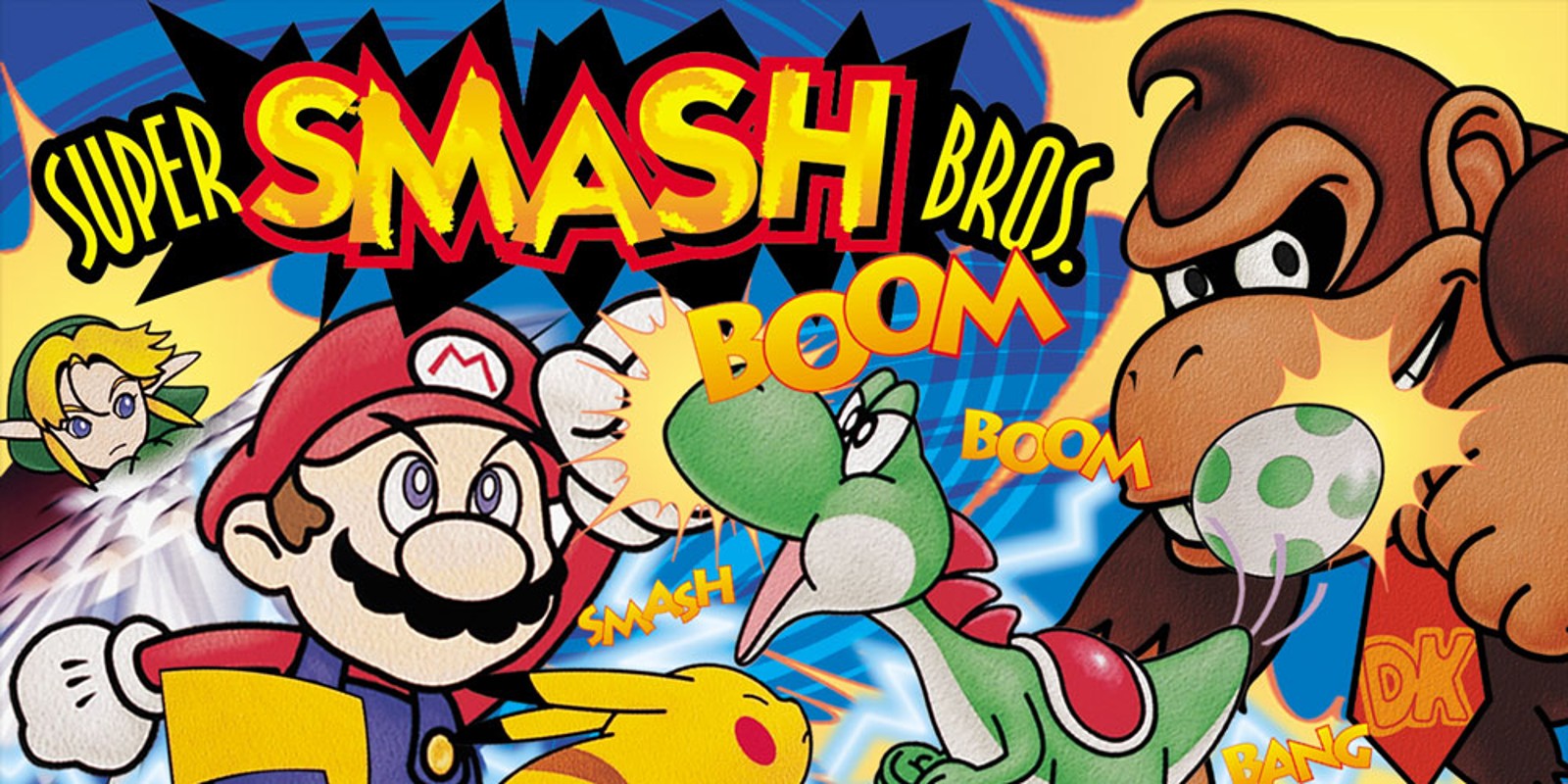
Screenshots & image credits
Nintendo screenshots, fighter artwork and item image credits.
Original Super Smash Bros. for Nintendo 64 (1999). Controls use the N64 controller; regional balance differences and later sequels are outside this introductory guide.
Gameplay screenshot 1
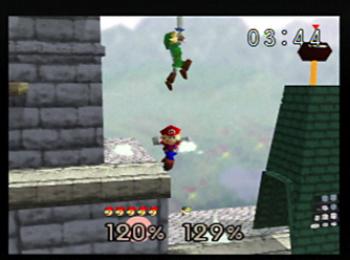
Official Nintendo screenshot. © Nintendo / HAL Laboratory.
Gameplay screenshot 2
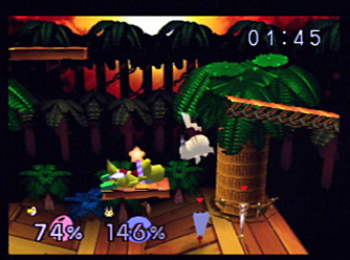
Official Nintendo screenshot. © Nintendo / HAL Laboratory.
Gameplay screenshot 3
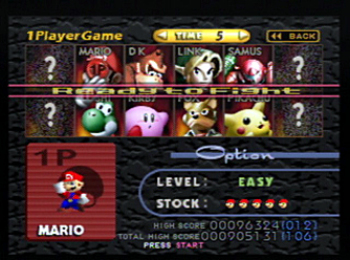
Official Nintendo screenshot. © Nintendo / HAL Laboratory.
Gameplay screenshot 4
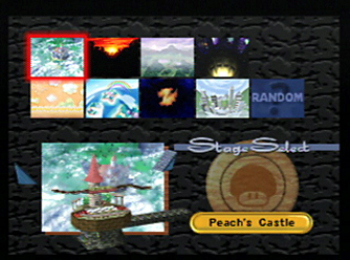
Official Nintendo screenshot. © Nintendo / HAL Laboratory.
Read a match through its damage display
The percentage beside each fighter is damage, rather than a health bar counting down. As damage rises, attacks generally launch that fighter farther. Look at the fighters’ positions as well as their percentages: a vulnerable opponent near an arena boundary presents a different opportunity from one standing safely in the middle. The screenshots capture a moment in that contest, while the controls guide explains how to move, attack and recover.
The stage is part of the contest
The original game’s nine VS stages give familiar Nintendo worlds different fighting spaces. When comparing a picture with the stage directory, look for platforms, gaps and the route back from an edge. A wide view helps you recognise the arena; it cannot show the timing of every moving element or hazard. Use Training Mode to practise a recovery route before relying on it in a crowded match. These are screenshots of the original N64 game; later Smash games have separate rosters and mechanics.
Practise one skill at a time in Training Mode before trying it in a match.