Phantom Hourglass sailing guide: sea charts, cannon and salvage
Plan island trips and distinguish ship travel from treasure recovery.
Edition covered
Original Nintendo DS adventure. Wii U Virtual Console controls and online service availability are outside these guides.
Plot the route on the sea chart
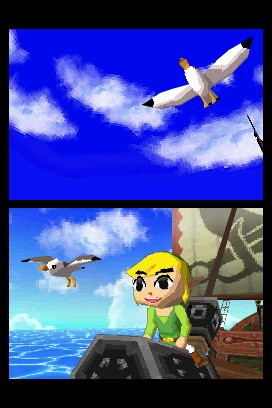
Draw a path that reaches your destination while leaving room to react to hazards. The ship follows the charted course, but you still manage threats during the voyage.
| Tool | Job | Useful habit |
|---|---|---|
| Sea chart | Plots travel | Draw a route with room to react. |
| Cannon | Attacks sea threats | Aim before a threat closes. |
| Salvage Arm | Recovers underwater treasure | Steer carefully around obstacles. |
| Ship parts | Customize the ship | Compare matching sets and condition. |
Separate ship equipment jobs
The cannon addresses surface threats; the Salvage Arm retrieves marked underwater treasure. Ship parts affect the vessel’s setup and appearance rather than replacing dungeon tools.
| Goal | Check first | Why |
|---|---|---|
| Main-story island | Available chart information | Some routes open through progression. |
| Treasure recovery | Marked treasure and Salvage Arm | Avoid an unproductive trip. |
| Shop visit | Needed supplies and rupees | Buy for a clear purpose. |
| Optional return | New equipment or remembered clue | Target an unresolved obstacle. |
Check the route while underway
Sea travel is not a cutscene. Watch approaching threats and adjust the journey when an obstacle appears ahead.
Return to the ship with a destination
After an island objective, check chart clues and story dialogue together. Sailing to an old island makes sense when a new tool or clue gives it a specific purpose.
Sea travel is not a cutscene. Watch approaching threats and adjust the journey when an obstacle appears ahead.
References
| Reference | Website |
|---|---|
| Nintendo: Phantom Hourglass booklet | m1.nintendo.net |
| Zelda Dungeon: Phantom Hourglass walkthrough | www.zeldadungeon.net |