
Worlds, water and castle routes
Adjust your movement to the course type and navigate the late castles.
Original 1985 NES/Famicom game. Luigi shares Mario's movement in alternating two-player play. Super Mario All-Stars, Super Mario Bros. Deluxe and The Lost Levels change features or courses and are outside these guides.
Make room around Fire-Bars
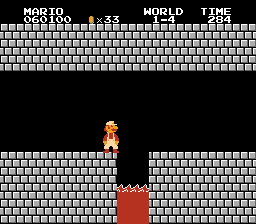
Castles put rotating Fire-Bars near small safe platforms and lava. Watch a complete rotation if the landing ahead is unclear. Then cross when the bar is moving away from the space you need. A mushroom cannot save Mario from falling into lava, so value a controlled platform landing over an extra coin or a rushed attempt to beat the timer.
Use different habits underwater
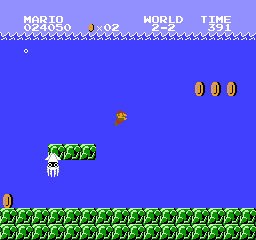
Press A repeatedly to swim upward and allow pauses to sink. Keep space between Mario and Bloopers rather than holding an upward rhythm continuously into danger. Water courses still include solid ceilings and narrow exits. In moving-platform stages, watch the platform's direction before jumping, and aim for where it will be at landing rather than where it was at takeoff.
Recognize the final castle maze
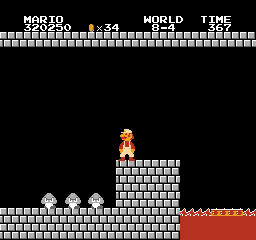
World 8-4 requires the correct pipe sequence. In the first main area use the pipe after the lava crossing; in the next main area take the elevated pipe reached with a hidden block. The following area's pipe after the lava leads underwater. From that swimming passage the route returns to the last bridge. If a room repeats, reconsider the pipe you selected instead of treating it as a new stretch.
A repeated castle room is a route clue: find the correct branch before spending the remaining timer.
Picture details
Game artwork belongs to its respective rights holders.