
Baldur's Gate beginner classes and party composition
Choose complementary party roles and understand ability scores before leaving Candlekeep.
Edition covered
The 1998 Sword Coast campaign and its AD&D second-edition fundamentals. Pictures show Baldur's Gate: Enhanced Edition, whose extra companions, kits, interface and optional campaigns differ from the original release. Tales of the Sword Coast is identified separately; Siege of Dragonspear is outside this guide.
Cover four essential jobs
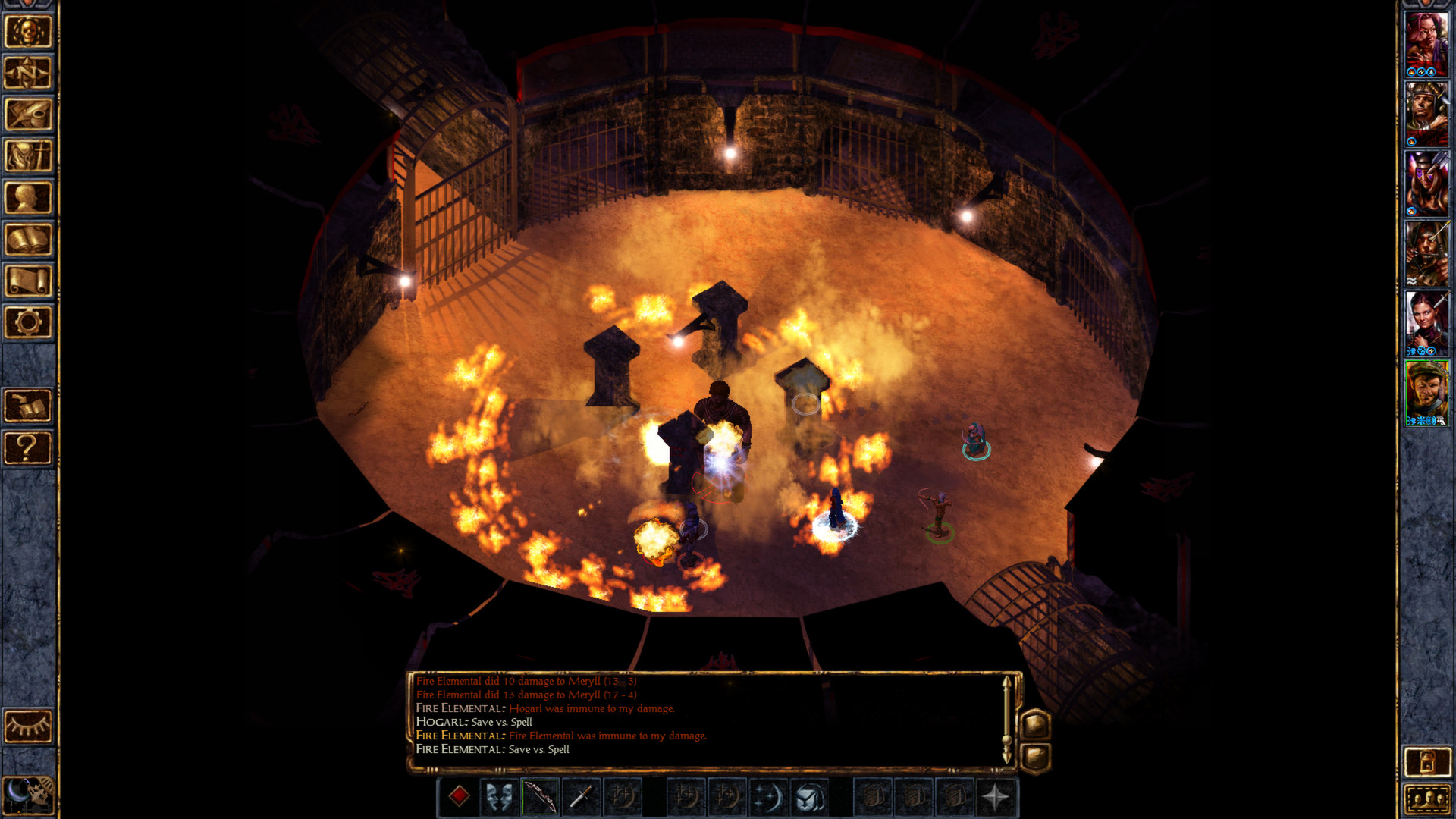
A six-person party does not need six different classes. It needs someone who can absorb attacks, someone who can remove traps, divine support and an arcane caster. Multiclass companions can cover more than one job.
| Job | Example | Why it matters |
|---|---|---|
| Front line | Fighter or Khalid | Holds enemies away from fragile casters |
| Thief utility | Imoen | Finds traps and opens locks |
| Divine support | Cleric or Jaheira | Healing and protective magic |
| Arcane support | Mage or Dynaheir | Control spells and magical damage |
Read ability scores by class
Strength is valuable to a melee fighter, while Intelligence matters to a mage. Do not distribute every roll evenly: the class's main ability and the equipment you plan to use should guide the allocation.
| Ability | Main connection | Practical effect |
|---|---|---|
| Strength | Melee fighting | Attack, damage and carrying capacity |
| Dexterity | Ranged combat and defense | Missile accuracy and armor-class adjustment |
| Constitution | Survival | Hit-point benefits depend on class and score |
| Intelligence | Mage spell learning | Arcane learning limits and chances |
| Wisdom | Divine casters | Bonus priest spell slots at high scores |
Equip weapons you know
Weapon proficiency and class restrictions matter alongside the damage range printed on an item. A powerful weapon can perform poorly when the character is untrained with it.
Avoid an unplanned dual-class
Human dual-classing temporarily disables the old class's abilities until the new class exceeds its old level. For a first campaign, a single class or an eligible nonhuman multiclass is easier to understand.
Human dual-classing temporarily disables the old class's abilities until the new class exceeds its old level. For a first campaign, a single class or an eligible nonhuman multiclass is easier to understand.
References
| Reference | Website |
|---|---|
| Baldur's Gate publisher listing | store.steampowered.com |
| Beamdog game manuals | files.beamdog.com |
| Publisher Adventurer guide | store.steampowered.com |