Pokémon Trading Card Game Deck Building and Trainer Cards
Improve consistency without confusing the Game Boy game with modern TCG formats.
Edition covered
Original Game Boy/Game Boy Color game: Japan 1998, international release 2000. Uses the early card rules and in-game booster sets, not TCG Live or current tournament rules. Some gallery images show the later Nintendo Switch Online frame.
Build around an attack plan
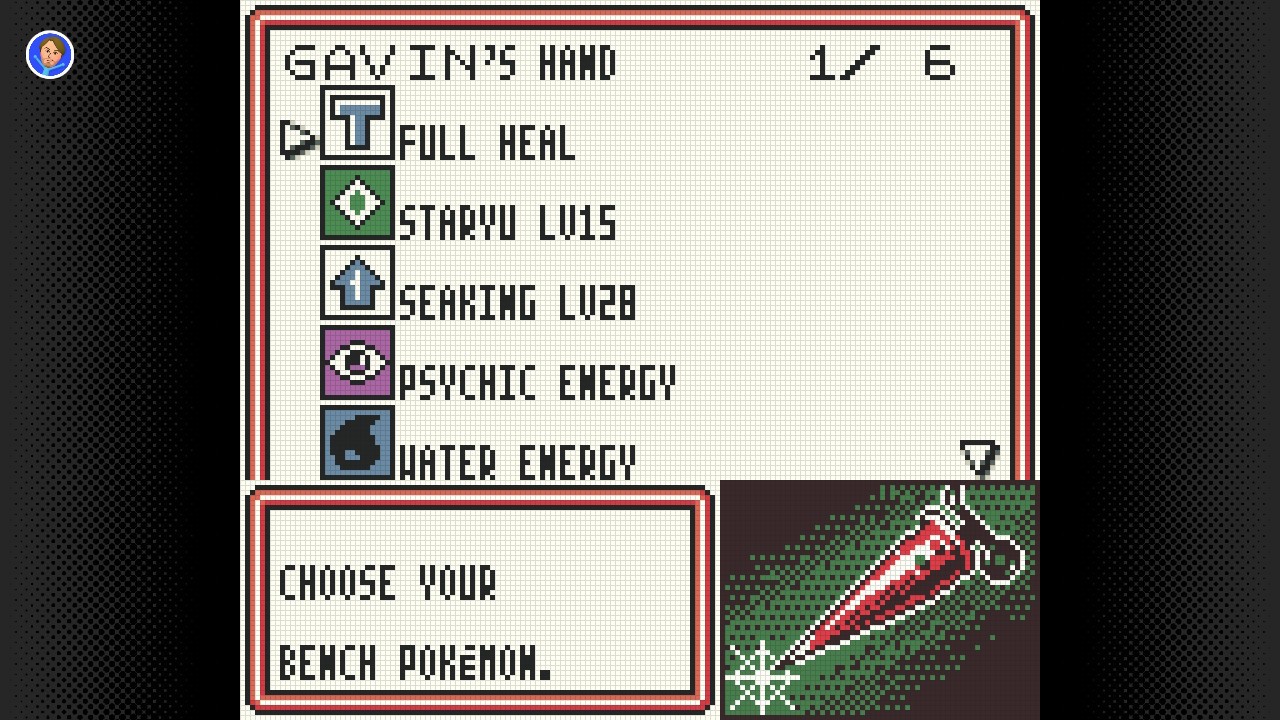
A legal deck contains 60 cards. Begin with a small group of attackers that use compatible Energy, then add enough Basic Pokémon to establish a board. A collection of unrelated rare cards is harder to power up consistently.
| Component | Purpose | Common mistake |
|---|---|---|
| Basic Pokémon | Provides opening and backup attackers | Too few legal starting Pokémon |
| Evolution cards | Improves a planned line | Missing the earlier stages |
| Energy | Pays attack and retreat costs | Too many incompatible types |
| Trainer cards | Draw, search and tactical effects | Filling every slot with extra Pokémon |
Keep evolution lines usable
A Stage 2 card needs its earlier stages or an applicable Trainer effect. Avoid adding a powerful final evolution without enough copies of the Basic and Stage 1 needed to reach it during a duel.
Use draw and search Trainers
Bill draws cards; Professor Oak trades the current hand for a new one. Search and draw effects help find Energy or an evolution when needed, but check what must be discarded before using them.
| Card | Role | Decision |
|---|---|---|
| Bill | Draw two cards | Simple hand development |
| Professor Oak | Discard hand and draw seven | Use valuable cards before discarding them |
| Gust of Wind | Choose an opposing Benched Pokémon to bring Active | Target a vulnerable or disruptive Pokémon |
| Switch | Exchange Active with a Benched Pokémon | Avoid paying a costly retreat |
| Energy Removal | Discard an opposing Energy | Delay a dangerous attack |
Test against a known opponent
Change a few cards after identifying a repeated problem: no Basics, no usable Energy or no answer to a specific weakness. Repeating a familiar duel makes the effect of that change easier to judge.
References
| Reference | Website |
|---|---|
| Official Pokémon game overview | www.pokemon.com |
| Game Boy card-game reference | www.serebii.net |