Borderlands 2 elements explained: fire, shock, corrosion and slag
Match weapons to flesh, shields and armor in Normal and True Vault Hunter Mode.
Borderlands 2 base campaign with the four original Vault Hunters and a level-50 base-game cap. Gaige, Krieg, DLC campaigns, level-cap upgrades, Ultimate Vault Hunter Mode and Overpower levels require additional content and are identified separately. Pictures are publisher-supplied PC media.
Match fire, shock and corrosion to the health bar
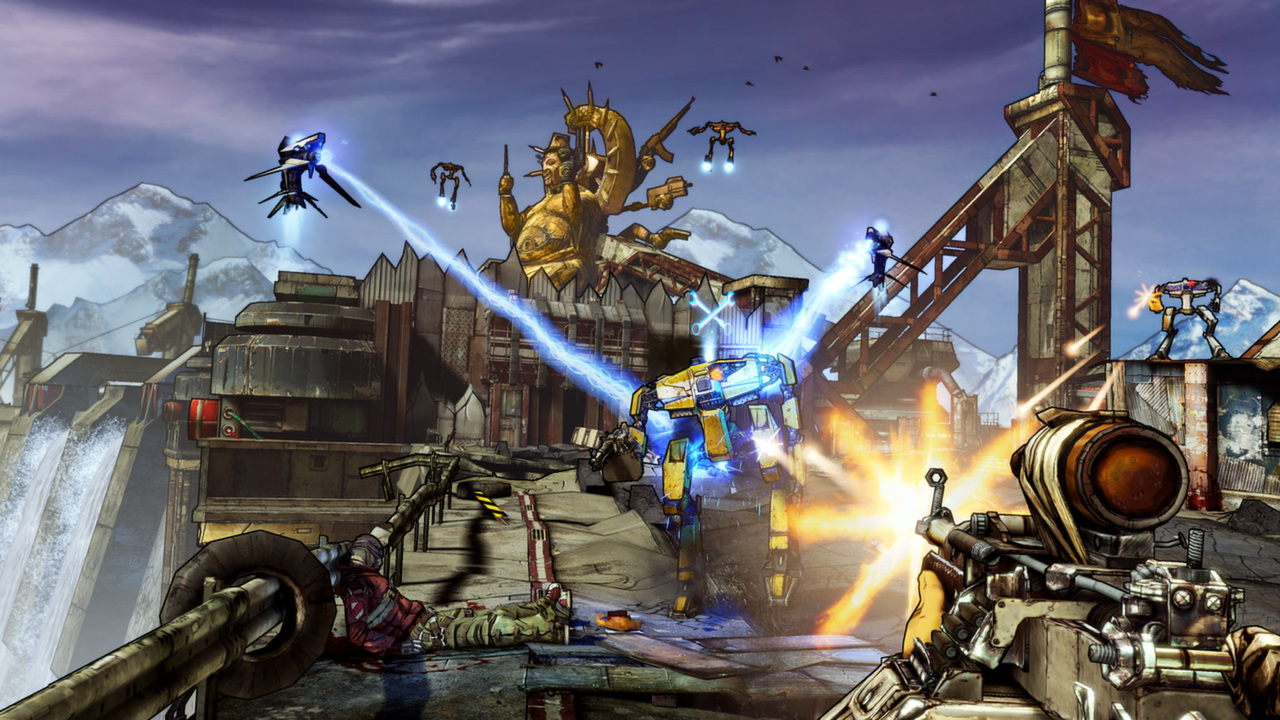
Use fire against red flesh bars, shock against blue shields and corrosion against yellow armor. In Normal, their favorable multipliers are 1.5×, 2× and 1.5× respectively. A target can change the relevant defense as you strip its shield, so be ready to change weapons mid-fight.
Avoid the stronger penalties in TVHM
True Vault Hunter Mode increases favorable multipliers to 1.75× fire versus flesh, 2.5× shock versus shields and 1.75× corrosion versus armor. Fire against shields or armor drops to 0.4×, and corrosion against shields also falls to 0.4×. A mismatched element can explain surprisingly weak damage.
Apply slag, then change to another damage type
Slag marks a target for increased damage from non-slag attacks. In ordinary solo Normal and TVHM play, that bonus doubles non-slag damage. Use slag to set up your next weapon instead of expecting the slag gun alone to exploit its own debuff; UVHM uses different bonuses.
Keep a general-purpose backup
Explosive and non-elemental weapons remain useful when your preferred element is resisted or ammunition is low. Compare a current-level weapon against your old favorite before blaming the class build. Element matching is one part of damage alongside weapon level, skills, critical hits and the enemy’s specific resistances.
More Borderlands 2 quick answers
Borderlands 2 TVHM guide: unlock, progress and the base-game level capHow to respec in Borderlands 2: Quick Change and skill-point planningThe blue, red and yellow bars describe defenses; do not choose the element solely from the enemy’s visual color.
Picture details
Game artwork belongs to its respective rights holders.