
Splinter Cell: Conviction Shadows and Last Known Position: how to flank a search
Read concealment, the white silhouette and the enemy search response.
Edition covered
Original 2010 single-player campaign. Gallery combines original PC and Xbox 360 publisher screenshots. Historical multiplayer modes are described for context; current publisher listings state that online features are unavailable.
Monochrome indicates shadow concealment
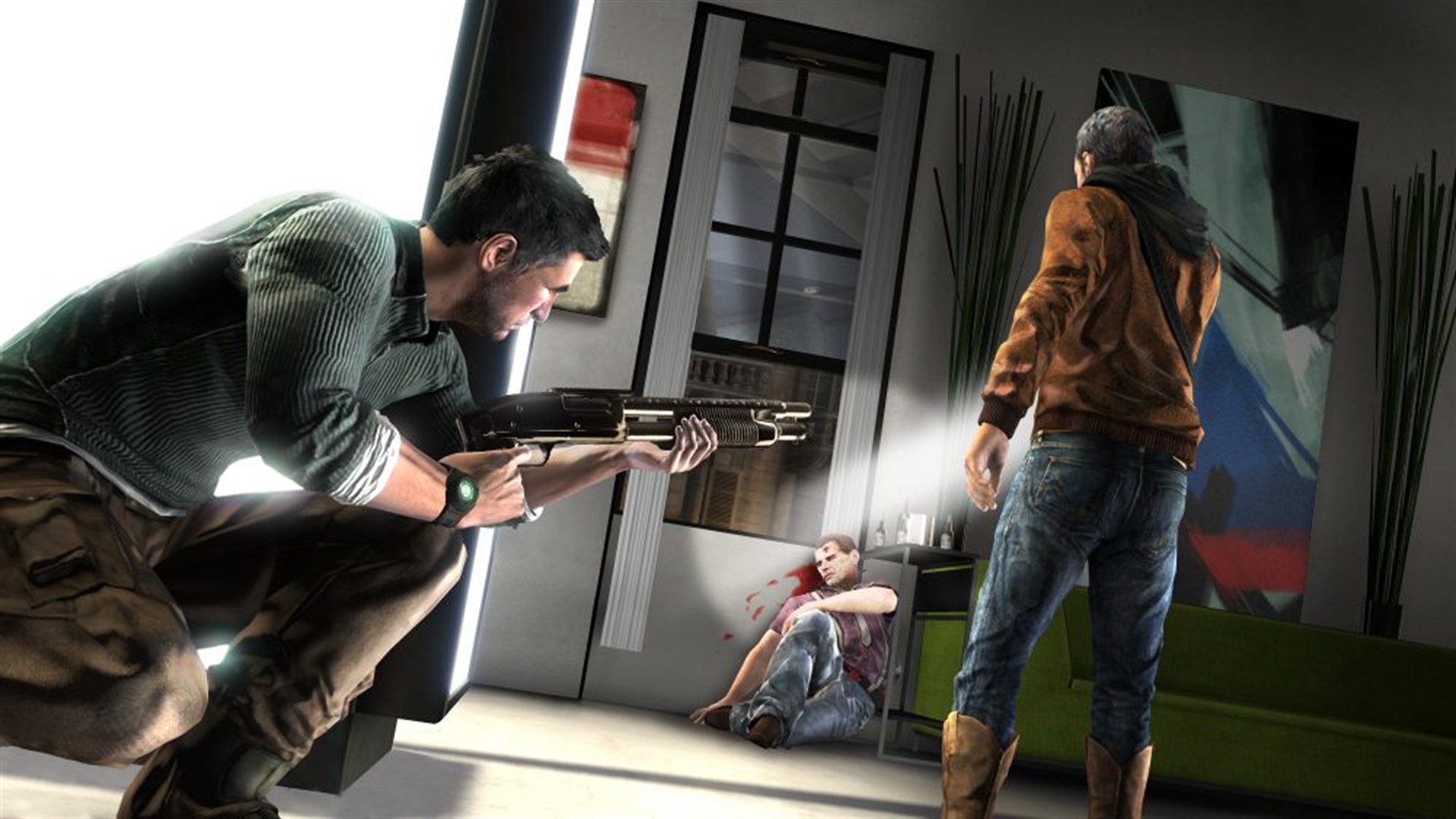
The presentation shifts toward black and white when Sam is concealed in darkness. Nearby enemies can still detect careless movement or close contact, so the filter should guide positioning rather than encourage running into a guard.
| Signal | Meaning | Useful response |
|---|---|---|
| Black-and-white surroundings | Sam is in shadow concealment | Maintain distance from guards |
| Last Known Position silhouette | Enemy’s latest confirmed sighting | Move away and flank |
| Searching enemy | Guard is investigating suspicion | Avoid the route being checked |
| Projected objective | Current story instruction | Orient toward the required action |
Leave the last visible position
The white silhouette marks where enemies last saw Sam. Break sight and move to another angle while they investigate that position; staying beside the silhouette gives away the advantage the system creates.
| Route feature | Benefit | Risk |
|---|---|---|
| Dark side passage | Breaks direct visual contact | A patrolling guard may enter it |
| Elevated ledge | Changes the attack angle | Expose Sam only when ready |
| Window or alternate doorway | Bypasses a watched entrance | Check the new room before entering |
| Destructible light | Creates darker cover | The shot can attract investigation |
Use cover to control the crossing
Cover-to-cover movement helps Sam cross a short exposed lane, but patrol timing still matters. Wait until a guard looks away, then move toward a position with another escape route.
Interrogations are contextual scenes
Campaign interrogations use nearby environmental objects to advance the conversation. They are not a general substitute for the takedown and cover systems used through ordinary patrol areas.
Campaign interrogations use nearby environmental objects to advance the conversation.
References
| Reference | Website |
|---|---|
| Splinter Cell: Conviction publisher listing | store.steampowered.com |
| Official Xbox publisher listing | www.xbox.com |
| Ubisoft Conviction overview | news.ubisoft.com |
| Campaign and equipment reference by Iceman22n86 | gamefaqs.gamespot.com |