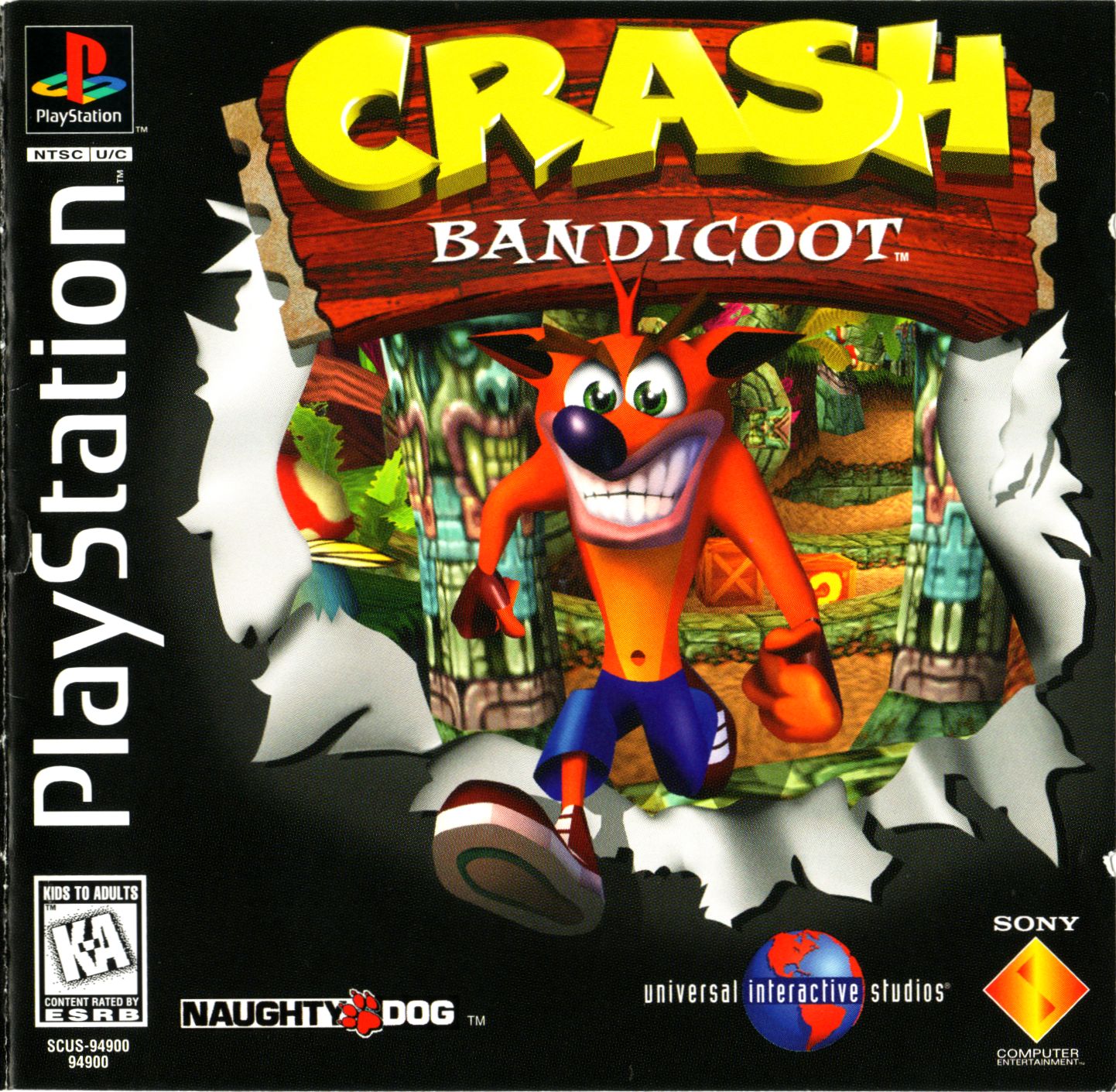
Start on N. Sanity Beach
Learn the original controls, build a safe jumping rhythm and understand when progress is saved.
Original 1996 PlayStation release; English NTSC-U/PAL rules. Japanese changes and N. Sane Trilogy are outside this guide.
A small move set, precise timing
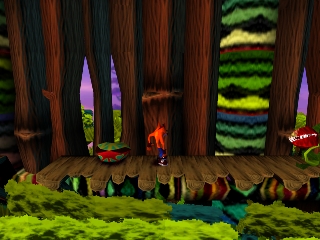
Use the directional pad to move, X to jump, and Square or Circle to spin. Triangle displays status; Start pauses. Practise each move separately on N. Sanity Beach before combining them. Approach a crate at walking speed, jump onto it, then try a spin from beside another one. The camera changes the apparent direction of movement between stages, so use the next safe patch of ground to check alignment. Judge a landing from Crash's position and shadow rather than the size of distant scenery.
Make reaching the exit your first goal
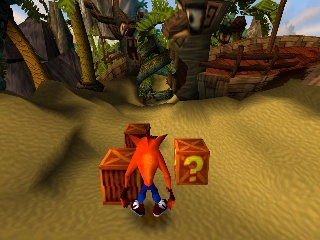
A first visit is useful even when it does not earn a gem. It reveals enemy placements, crate stacks and any translucent gem platform that requires a later return. For narrow bridges, pause on stable planks and line up the next jump. For timed obstacles, watch a complete cycle before committing. Keep the path ahead clear before collecting a tempting pickup near an edge. When a section causes repeated deaths, concentrate on passing that section consistently before attempting a complete crate run through the whole level.
Use the original saving opportunities
The 1996 game does not offer the remake's modern saving flow. Successfully finishing a Tawna bonus round provides an opportunity to save, while gem awards also offer progress recording. Use those prompts when they appear. A checkpoint crate records a return position inside the current attempt, but it is not the same as writing progress to a memory card. Keep an eye on available lives and take an accessible bonus round seriously: its fruit and extra lives can make the next unfamiliar stretch easier to practise.
Make one exploratory pass, then attempt the gem once you know the route and have any required colored gem.
Picture details
Game artwork belongs to its respective rights holders.