
Baldur’s Gate II: Classes, THAC0 and dual-class planning
Understand old-rule combat numbers and the tradeoffs behind class combinations.
Edition covered
Guides cover unmodified Baldur’s Gate II: Enhanced Edition, primarily the Shadows of Amn campaign. Throne of Bhaal and Watcher’s Keep are identified separately. Original-campaign companion advice remains relevant to classic BGII, but Enhanced Edition additions and modded spell interactions are not silently mixed in. Pictures show Enhanced Edition.
Choose a class you want to manage through the campaign
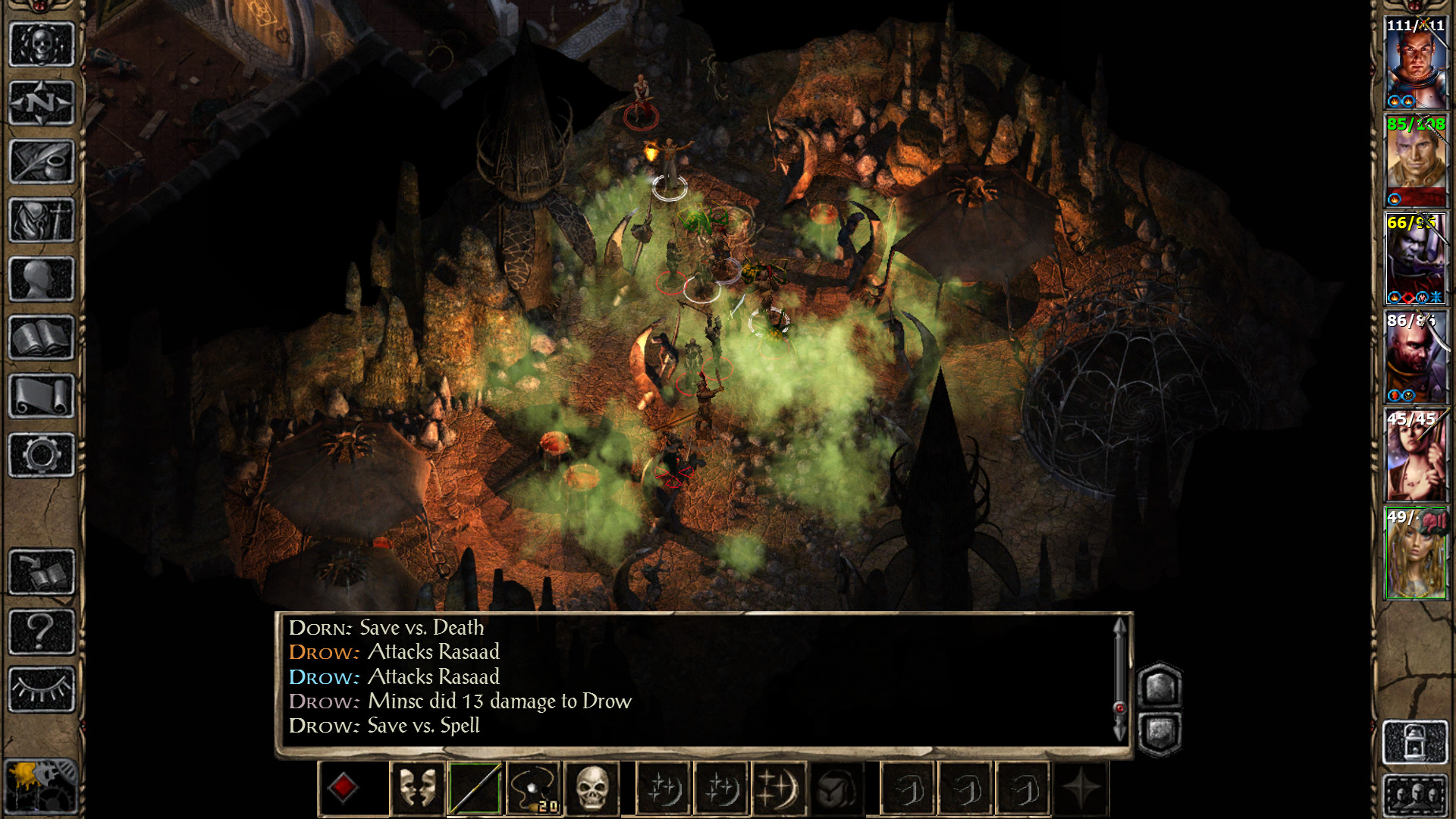
A straightforward warrior is easier to learn than a caster with many permanent spell choices, but every class benefits from party support. Berserker offers a clear physical role; an Inquisitor supplies strong anti-mage tools; a Mage offers flexibility through scroll learning. These are approaches, not a universal ranking.
| Choice | Appeal | Tradeoff |
|---|---|---|
| Berserker | Clear melee role with useful rage protection | Still needs allies for spells and traps. |
| Inquisitor | Strong tools against hostile magic | Has kit-specific limits on normal Paladin abilities. |
| Mage | Learns a broad spellbook through scrolls | Needs spell preparation and protection. |
| Fighter / Mage | Combines fighting and arcane magic | Multiclass experience is divided. |
| Fighter / Thief | Physical combat plus utility skills | Requires attention to stealth, traps and positioning. |
Read the older combat numbers correctly
Lower Armor Class is generally better, and a lower THAC0 improves the roll needed to hit an opponent with a given Armor Class. Saving throws also improve as the target number falls. Do not apply a modern RPG assumption that every displayed number should increase when comparing equipment.
Distinguish multiclassing from dual-classing
Eligible nonhuman characters can advance multiple classes simultaneously, splitting experience. Eligible human characters can stop one class and begin another; the old abilities remain unavailable until the new class level exceeds the old one. Those systems create very different periods of strength and weakness.
| System | Progression | Main caution |
|---|---|---|
| Single class | All experience advances one class | Narrower personal toolkit. |
| Multiclass | Experience divided among simultaneous classes | Each class advances more slowly. |
| Dual class | Human stops one class and starts another | Old abilities are suspended during the transition. |
| Reactivated dual class | New class exceeds the old class’s level | Both sets return within equipment and class restrictions. |
Plan dual-class downtime before committing
A popular dual-class combination can still be inconvenient if the campaign ends before the new class overtakes the old one. Check attribute requirements, experience needs and how companions will cover the missing role. Keep a save before the change and avoid treating a build’s final form as its entire play experience.
Compare Armor Class and THAC0 in the correct direction: lower is usually better.
References
| Reference | Website |
|---|---|
| Beamdog: Amn Survival Guide | files.beamdog.com |
| Beamdog: Mastering Melee and Magic | files.beamdog.com |
| Beamdog: Enhanced Edition product | store.steampowered.com |
| Baldur’s Gate Wiki: Breach and protection types | baldursgate.fandom.com |