The three-day cycle and masks
A starter guide to The Legend of Zelda: Majora’s Mask: give each cycle a goal, know what resets, use the bomber’s notebook, experiment with transformations.
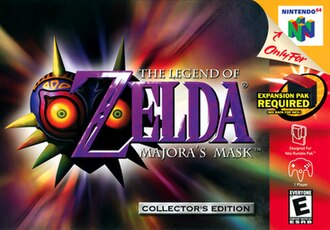
Original Nintendo 64 release; saving and some mechanics differ in Majora’s Mask 3D.

Give each cycle a goal
Choose one main objective before setting out, such as opening a route or following a character. Avoid beginning a long unfamiliar quest close to the end of the final day.
Know what resets
Playing the Song of Time returns you to the beginning of the cycle. Major equipment and masks persist, but many temporary events and consumable resources reset. Deposit rupees in the bank before returning.
Use the Bomber’s Notebook
The notebook helps track people and appointments. Record the day and time of an event, then arrange your route around that appointment on a future cycle.
Experiment with transformations
Deku, Goron and Zora forms provide different movement and interaction abilities. Revisit an obstacle with the relevant form instead of assuming every route uses human Link’s equipment.
Bank resources before a planned reset
The bank preserves deposited rupees across the cycle, making it a useful final stop before returning to the first day. Other consumable resources and temporary events do not share that persistence. Choose the main objective early and avoid starting an unfamiliar multi-stage appointment late on the final day. A failed route can still produce useful knowledge if you record the time and the point where the schedule stopped working.
Separate the original save types
The original Nintendo 64 game uses Song of Time saving alongside owl-statue temporary suspension once available. They serve different purposes, and should not be described with Majora’s Mask 3D’s later rules. Check what the current action will preserve before ending a session. Keep cycle goals manageable and use known routes when little time remains, so saving and resetting are deliberate planning choices rather than last-second reactions.