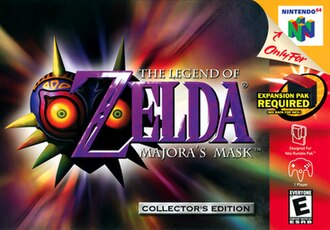
Fun trivia
Three memorable details to notice while playing The Legend of Zelda: Majora’s Mask.
Story and late-game spoilers.
Original Nintendo 64 release; saving and some mechanics differ in Majora’s Mask 3D.

The clock is part of the puzzle
People follow schedules across the three-day cycle. Understanding when something happens can be as valuable as finding where it happens.
Different bodies, different movement
Transformation masks change Link’s movement and abilities. They are not just alternative costumes.
A notebook beats a good memory
The Bomber’s Notebook makes the lives of Termina’s residents part of your route planning. Small appointments can lead to major rewards.
Learning survives when events do not
Termina’s cycle makes information a lasting form of progress. After watching a meeting or learning a route, the player can organise a later cycle more efficiently even if the immediate event resets. This gives repetition a purpose beyond retrying a failed jump. The town becomes increasingly understandable through schedules and relationships, while the approaching moon keeps that knowledge useful. A checklist is most effective when it records conditions rather than only outcomes.
Transformations change how a place is inhabited
Deku, Goron and Zora forms are connected to Termina’s people and histories as well as movement. Their instruments, body shapes and travel methods make shared terrain feel different. An obstacle that frustrates human Link may be ordinary ground for another form. The original Nintendo 64 behaviour should remain the reference here, since the 3DS remake changes some movement and boss details that can substantially alter a remembered solution.